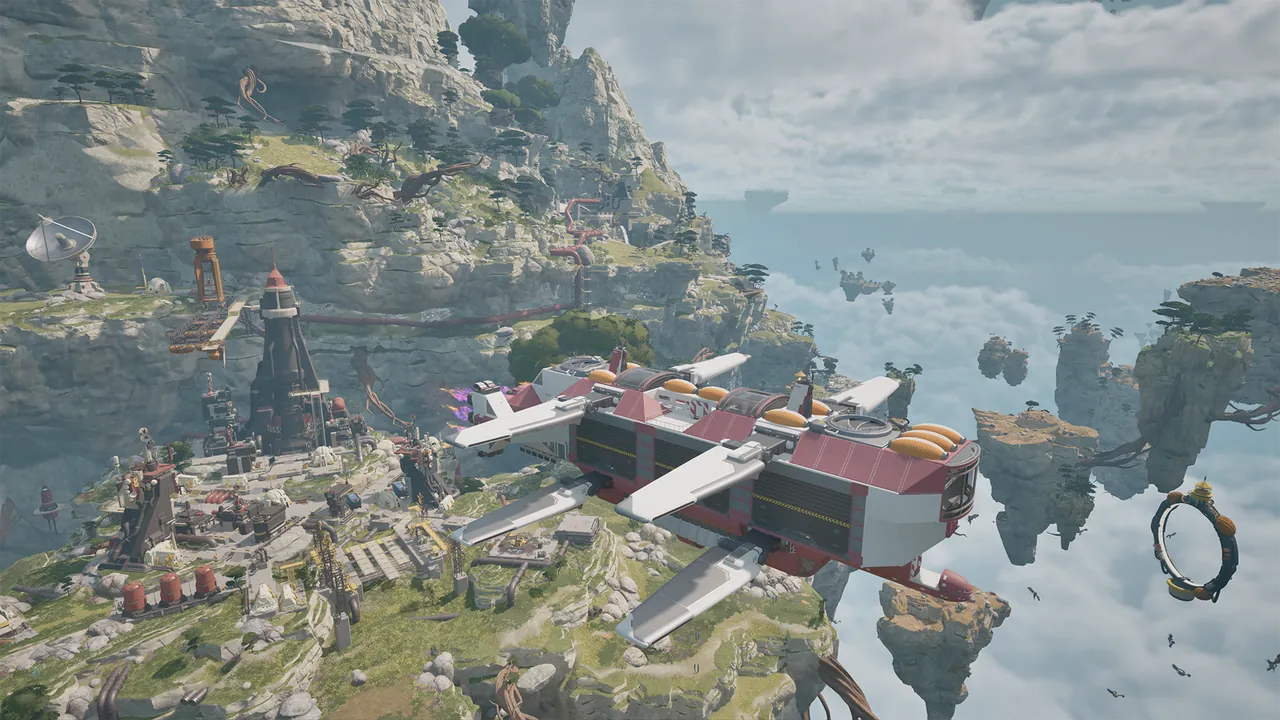
What is the Cloud Cruiser?
The Cloud Cruiser is a piloted mobile airbase for carrying facilities, supplies and Wasp aircraft through Tycos. It brings the workshop closer to the expedition instead of leaving production behind on a distant island.
The systems below are described in pre-release developer material, checked October 12, 2026. Availability and operation may change during Early Access; use your build’s requirements for installation and costs.
Power, fuel, movement and lift do different jobs
The Cruiser’s operating chain connects electricity generation, hydrogen production and propulsion. Lift is a separate requirement for keeping the larger airbase suspended.
| System | Job | Planning check |
|---|---|---|
| Nuclear reactor | Generate electricity | Supply the connected machinery |
| Hydrogen extractors | Use power to produce fuel | Keep production aligned with travel needs |
| Thrusters | Move the vessel forward | Maintain usable fuel and functioning propulsion |
| Lift system | Support the airbase in the sky | Account for weight as the layout grows |
More workshop or living space increases what you want to carry. It does not automatically provide more power, fuel or lift. Plan the support systems alongside the rooms and equipment.
When changing the layout, recheck operation before starting a longer journey. Avoid treating a self-sustaining design as a guarantee that every arrangement can travel indefinitely.
Build around clear routes
Modular customization lets a crew shape the Cruiser around its activities. A useful layout makes the essential paths easy to follow: helm to aircraft access, deliveries to storage, storage to processing, and workshop to the supplies it needs.
Reserve space for facilities you will add later. Filling every open corner can make it harder to reach the parts used on every expedition.
The planned installable autopilot frees attention for other onboard activities while travelling. It is still sensible to monitor the route and weather; do not rely on unattended travel or obstacle avoidance unless your version supports it.
Docking turns Wasps into local expedition craft
Planned docking stations provide places to store, refuel and repair Wasps. The smaller aircraft can then leave for scouting or salvage while the Cruiser carries the supporting facilities.
This changes the purpose of a return trip. Instead of flying back to a workshop left on the first island, bring supplies to a base that moves with the crew.
Leave clear access around docking and service areas. Check actual station costs and installation requirements before expanding. The Wasp dossier covers aircraft roles, while the flight guide covers departure preparation.
Put deliveries close to processing
The planned cargo lift organizes scrap delivered at its hatch. Larger processors handle substantial salvage aboard the ship, complementing the hand-held extractor used on smaller resource jobs.
A practical workflow is delivery, sorting, processing, then storage or crafting. Place the handoff area where returning supplies can reach the workshop without obstructing other movement.
If several players are gathering, agree on where each kind of delivery belongs. Clear storage habits are useful even when a cargo system offers automatic organization.
For a smaller workshop before these larger systems, use the portable camp guide and crafting notes.
Research, cultivation and living space
Planned research stations support work with artifacts and objects. Cultivation facilities let the crew grow and harvest plants while travelling.
Keep those work areas reachable from supplies and storage. Reserve room for future facilities instead of assuming the initial layout will meet every later need.
Sleeping quarters, furniture, lounges and patios make the Cruiser a home as well as a machine. Separate busy delivery routes from living space where possible. Crop timing, research requirements and any effects of rest should come from the current interface, not assumptions about how another survival game works.
Keep a shared crew coordinated
ATMOSFAR lists solo play and online co-op for up to four players. A group can divide attention between piloting, supplies, construction and Wasp expeditions without treating those jobs as fixed classes.
Before splitting up, agree on:
- Where returning resources should be delivered.
- Whether the Cruiser will move while someone is away.
- A recognizable meeting point for returning aircraft.
- Who is watching the route and who is preparing the next service stop.
Joining, save ownership and dedicated-server support are separate questions in the multiplayer briefing. For the smaller repair-and-refuel loop, start with survival basics.
FROM THE FLIGHT DECK
Watch the game in motion.
Choose a video for a closer look at the journey. Demo footage contains spoilers and may differ from Early Access.
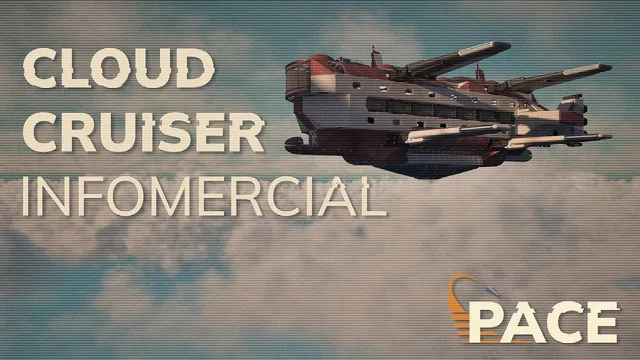 OFFICIAL SYSTEM TOUR3:20
Presenting: The Cloud Cruiser
Power, lift, Wasp docking, cargo handling, research and cultivation aboard the mobile airbase. February 2026.
Watch on YouTube ↗Sources & further reading
Official updates and related videos.
Help us keep this field guide accurate. Send a correction.